This safety briefing was made by Charlie Carter (one
of my group members).
The main health risk that would come about in shooting
is damage to actors in the fighting sequence, to make sure any injury does not occur
we will have to plan the fight scene in incredible detail and rehearse a number
of times in a slow speed to the one we will shoot in. If the injury occurs then
we will have to bring a first aid to aid the person and if it is serious enough
call 999.
In addition to the fight scene there is the knockout
scene in which our character gets punched in the face twice, during the filming
of this scene we will have first aid kit on site, as well as ice
for the actor. We will also take log, regular breaks before filming this
shoot again so it is not continuous.
Other risks include tripping over things such as the
wires that connect to the cameras and lights, as well as tripping over the
track. To prevent this, areas will be marked out and people on set will be
careful in order to enable the prevention of an injury.
Although the film is being shot in controlled
conditions as we are indoors and are moderately safe for the majority of
anomalies.
This podcast was recorded by my self and team members surrounding the concept of a fourth group member leaving and how we felt and tackled the situation.
My group and I have used time efficiently, in terms of
filming. We shot of our preliminary task in a two-hour period covering
everything we planned to shoot. The editing of this took all together two hours
as well so we managed to finish our preliminary task in one day. This has
allowed our group to move forward quickly and efficiently enabling us to
prepare and shoot our opening sequence as quickly as possible.
We also had our film planned out in massive detail after
just a few weeks of preparation meaning upon getting to the location we can be
time efficient. That way if there are any additional shots we need or any
delays or technical difficulties, our film quality will not suffer. This is due
to our hard work and high work ethic.
The costumes, location and equipment has either
all been purchased or borrowed so the film can be shot quickly without
having to waste time going out and buying a prop whilst at the location as we
have limited time there. Also this way we had plenty of time to assess if we
had all the right equipment chosen. Considering we had a lot of equipment on
shoot, this was extremely important.
Shooting the actual sequence - we used our time very
effectively, there were no delays due to the planning that had taken place
before, this included: shot lists, scripts, location recce and various other
planning methods. We managed to film all the necessary shots in six hours while
maintaining an excellent standard of filming. This was well timed as we did not
have to book the location for any more time and did not miss any shots we
wanted. In addition, we worked very well as a team and I was a great director
in my opinion because I managed to get everyone organised in order for this shoot to go well.
The editing process of our opening sequence did go
well in terms of time management because we got it done within a week of
starting the editing process. We worked well as a group to complete it and
we’re all very proud of ourselves. The editing consisted of the use of various
transitions and different video effects like, incorporating an element of
slow-motion when Charlie is shadow boxing in the ring; captured through the use
of a tracking shot. All these aspects combined create an amazing atmosphere!
The audience will feel glued to the screen and definitely engaged throughout,
due to these brilliant techniques. The active audience uses this media text to
be engaged and therefore entertained. This links in with Blumler & Katz’s
uses & Gratifications theory because audiences being engaged through these
aspects do indeed entertain the active audience and therefore this applies to
this specific theory.
Overall, the whole time management based around this
project has been very successful in terms of not only filming but also editing
and planning. We have been very efficient utilizing the time given and
everything has gone according to plan.
This work was produced by my team member Charlie and partly me.
This is podcast recorded with me and my team members. The podcast is a general update and informative piece of recording regarding how the process has gone so far.
The camera
shots and angles represented in the this opening sequence really give the
audience an idea of not only what the film is about but potentially the genre
as well. These technical elements are crucial into the connotations surrounding
the opening sequence and what the possible narratives is in the near future. An
element of foreshadow maybe be presented in the opening sequence through the
use action codes, for example: a potential major character is seen with a
batten (an important prop) connoting that the rest of the film will entail
minor characters getting beaten up. As a result, this links in with Roland
Barthes Code theory because it illustrates several action codes; thus
particular media texts contain certain codes which audiences can interpret to
help them gain a better understanding of the narrative.
The close up
of facial expressions of the protagonists face connotes anxiety and frustration
due to the careless, unforgettable and callous acts the major figure
demonstrates through out the opening sequence. Also, the hand-held movement
when the protagonist opens up the van door signifies the trembling fear that he
his experiencing for the “geezer” because presumably acid has been splashed all
over his face. As a result of this, the audience feels empathetic towards the
minor character due to the multiple shots of him in extreme pain. Therefore,
this does tie in with Rick Altman’s Genre Theory because syntactic elements are
present due to the fact that the audience feels a certain empathetic theme
towards this particular character.
Moreover, the established shot of the camera trailing the car from behind
connoted them going on a journey and could contribute towards the narrative and
enigma codes of the film. The medium
shot of the windscreen looking in through the car is accompanied by noticeable
and purposeful reflections on the windscreen connoting the unclear confusion
the protagonist is representing, this is further denoted through his voice over
which portrays him in an unstable state of mind. For example: “Jason needed a
new shirt, the geezer needed a new face”; this simple piece of dialogue
signifies the distressed mental state of himself.This is again, further represented through
the soft tone of voice that connotes the unsure and concerned belief the
protagonist (Billy) is experiencing.
In addition, the combination of medium shot through the window screen
with the wipers, swiping the dirt away potentially connotes a clean slate for
the man after getting out of prison after serving a five-year stretch. However, the flow of the opening sequence cuts
to an extreme close up of his face and his facial expressions connote he is out
for revenge – the two contrasting and juxtaposition camera shots are placed
next to each other deliberately in order to emphasise the confused state this
character is in; this could possibly explain all the violent acts he has
conducted so far in the film. Also, this may lead to a mental illness later on
in the film; which immediately signifies a narrative enigma within the opening
sequence. In addition this could lead onto a multi strand narrative whereby we
see this character with other minor characters concerning his mental health and
well – being.
The
fast-paced editing of multiple short-takes when a conflict has emerged gives
the audience a real sense of danger and excitement, which in turn grabs and
entices the target audience’s attention. This editing technique is a good way
of demonstrating the genre through technical channels. It connotes the film
itself will be fast-paced and dramatic – always edging to the brink of your
seats.
Moreover,
the action match consisting of the major character splashing acid on the
victims face makes the scene seem more real. The effect of this is to create a
connection between the victim and the audience; in order for the audience to
feel empathetic towards a character and form an emotional attachment with the
film itself! Also, the shot reverse shot editing technique while the two characters
are in the van alternate between each other connoting the difference in
personality – which further reiterates the protagonist’s worry about what he’s
doing and getting himself into.
Considering
the mis-en-scene of any film comes with significant importance when
representing certain characters or even the genre in a specific way. The
Chiaroscuro lighting at the start of the opening sequence connotes a possible ‘dark
side’ the narrative will incorporate further on as the storyline progresses. An
element of foreshadowing has taken place and enables the active audience to ask
questions about not only the character and possible enigmas, but also the genre
itself.
Costumes are
effective way in which a characters personality can be connoted to the audience
through by just what they’re wearing. The major character in the opening
sequence is wearing a Black and Gold shirt connoting he likes to show off and
is represented as the ‘main man’ running the show. This is a clever use and
example of semantic codes embedded in the opening sequence in order to gain an
insight into the genre.
As I
mentioned dialogue and voice over’s above, it emphasise the characters
personality. Furthermore, the sound consists of non diegetic sound of a music
track which denotes a constant rhythm of a sophisticated, electronic
synthesiser keyboard. A builds a rhythm and subsequently builds an atmosphere
within the room of the audience because it is extremely dramatic.
The
protagonist directly addresses (also known as breaking the 4th wall)
the audience through the use of a voice over in some parts of the opening
sequence, for example: Billy (the protagonist) says, “And that was that, job
done” allowing the audience to sympathise with the character because the
audience realise, what has Billy got himself into? This forms a bond between
the protagonist and the active audience straight away, linking in with Rick
Altman’s Genre theory due to the fact that syntactic elements are present when
a connection is formed between character and audience.
The
protagonist Billy is represented as an open minded character ready for anything
as he says, “I’ll try anything me”. However, Billy is represented as a naive
character because he gets himself involved in with a lot of trouble; and then
starts to possibly become confused and unstable mentally due to the technical
elements explained above. Also, the major character going by the name of Jason
is represented as a hard headed tough guy with a lot to say. This character is
useful into connoting and representing the genre because he adds dramatic
action codes and causes conflict a lot.
A dominant ideology,
which is clear in the opening sequence, is in fact the element of ‘a tooth for a
tooth’ or ‘an eye for an eye’. The sense for revenge denoted in the opening
sequence is represented through a major character shouting, “You grass” and
“grass”! Subsequently smacking up the guy under the name of revenge. This
dominant ideology links in with Tzvetlan Todorov’s Narrative Structure theory
because the theory suggests that all stories follow a similar structure and
starts with an equilibrium. The equilibrium is connoted at the start of the
opening sequence of Essex Boys as unanswered questions are all portrayed, a
long with a possible narrative has come to light through the use of the
embedding of codes.
The genre of
this opening sequence is clearly signified through the embedding of codes and
specific aspects within the mis-en-scene. First of, the opening sequence
suggests its a gritty British drama based on real life events, similar to my
opening sequence on how it is based on a true story and the fact that my
opening sequence contains violence. The embedding of codes is extremely useful
into telling what the genre could be, it allows audiences to connect and think
about the media text they’re visualising. The example of action and semantic
codes is the major character – Jason – conducting a fight scene and wearing a
bright Black and Gold shirt. This links in with the mis-en-scene and
subsequently costumes for the characters that don’t only represent their
personalities but also the genre itself. Moreover, the colours and locations
used aren’t all vibrant and brilliant; in fact it is not quite lively –
connoting the darker side to the opening sequence. Therefore, signifying the
genre it is based upon. It is based on real life events because it mentions it
within the title credits, but also due to the concept of a voice over included
does bring that certain realism element that does suggest it is based on a true
story.
There are
some noticeable generic conventions within this opening sequence, for example:
it engages the active audience due to the fact that the action codes
implemented capture the audience’s attention. For instance: an action element
of a major character beating a minor character up signifies possible
disagreements in the future of the narrative. Therefore, this is a conventional
element of an opening sequence and has been incorporated for the desired effect;
which is to engage the audience and encourage them to carry on watching. On the
other hand, a generic opening sequence convention that is conventionally
established in these types of genres is potentially a flashback. A flashback
reflecting what may have happened that has resulted in the major character,
known as Jason, inflicting revenge on a minor character. Considering it is
based on true events, a flashback would of been helpful to gain a better
understanding of what has happened in the past in order to gain more of an
insight into the film, resulting in the audience being intrigued by the
storyline. The director (Terry Winsor) has subsequently not done this and is in
fact an anomaly within the generic convention boundaries of this particular
genre. Accordingly, this opening sequence has a mixture of non-conventional
elements and generic aspects.
The audience
reception is crucial on how they view this sequence and could be the key to the
success of the movie. The opening sequence would appeal to a specific target
audience who wished to be entertained. It is extremely important that the
sequence is engaging for the audience in order to capture their interests and
spark their thoughts regarding the film. The engagement aspect is achieved through
various technical elements, for instance: the editing techniques when conflict
occurs expresses a fast-paced, tension-building and dramatic aspect which in
turn engages the target audience. Also, this does indeed link in with Blumler
& Katz’s Uses & Gratifications theory which suggests that audiences use
media for different reasons. They think audiences are active and that the media
fulfils a certain ‘function’ for audiences. In this case, the ‘function’ behind
this opening sequence is entertainment due to the fact that it is most
engaging.
The body
responsible for producing this film (Jeff Pope) indicated possible narratives
within the first minutes of the opening sequence in order to entice active
audiences. Potential narratives were signified through the use of the embedment
of enigma codes, for example: the major character ‘Jason’ severely beating up a
minor character for no immediate reason – later becomes clear – signifies
enigma coded elements; such as, what happened? Was it that bad? Who is Jason
out for revenge next? Therefore, possible narratives have been signified
through the use of enigma codes.
Unfortunately I was not able to find a clip of just the opening sequence.
‘Never Back down’ presents a lot of action codes in the
opening sequence, for example: one of these action codes are the extremely
rough tackles taken place by protagonist ‘Jake Tyler’ and signifies what may
happen next in the narrative; the code helps the audience predict that in the
future of the film and fight may break out – that’s exactly what happens! This
therefore relates to Roland Barthes code theory because it the film represents
some action codes that are described by this particular theory. Furthermore,
the fact that a fight broke out can potentially link in with Tzvetlan Todorov’s
Narrative structure theory whereby a certain piece of media text starts with an
equilibrium and goes through the process of disruption, battle of resolution
and then a new equilibrium; in order to add to the plot and enigma of the
narrative. Regarding this specific opening sequence, the equilibrium is the
football game but almost instantly and spontaneously, this rapidly morphs into
the disruption aspect of the theory and a huge fight breaks out on the pitch.
Accordingly, this relates to Todorov’s theory because it aids the structure of
the narrative and ‘Never Back Down’ portrays these aspects of the theory.
The scene starts from the perspective of
camera footage featuring the game. This in fact demonstrates an audience’s
point of view for the viewer and therefore the active audience can relate to this
particular mis-en-scene because it enables a duel perspective as the camera
pulls out to a wide shot and gives the audience an idea of the surroundings and
therefore the shot turns into an established shot.
The long shot of the stadium signifies the representation of
distance between the two teams playing on the pitch. Distance in this sense
isn’t that they’re far away from each other (because they’re not) but instead
both teams are battling away for different goals. Both teams represent
different ideologies and in fact in that sense, the teams couldn’t be more
further away from each other. Also, the birds-eye-view shot of the fight
breaking out echoes the effect and puts into proportion of how competitive
these characters actually are.
The camera movement is very shaky because it is emphasising
a sense of realism due to the fact that it is probably what the characters are
experiencing and the target audience can almost relate to this through the
camera movement.
The close up shot of the protagonists face through the
perspective of an opponents mask connotes that when it comes to the subject of
his dad he feels guilty, trapped or some form of remorse regarding this
sensitive topic. Reason for this is because an opponent says, “it’s too bad about
your old man” and ends up expressing his aggression on him.
The quite miserable mood of the scene - due to the fight as
the scene progresses – is reflected through the whether because it is raining.
This is called ‘pathetic fallacy’ and is a good method of engaging the active
audience because it captures their emotions by informing the demographic of the
mood the film is connoting; this mood is the fairly intense and dramatic,
suggesting a stormy environment like something bad is going to happen. This
element of foreshadowing signifies that a fight may break out due to the
rivalry and their competitive nature.
There are some moments of jump cut editing in order to connote
the intensity of the moment. This particular editing technique is often used to
connote a sense of disorientation for either the viewer or the character. In
this case, it’s the character because a fight scene breaks out. Although, this
could potentially disorientate the viewer as well in order for the audience to
receive the emotions that the characters are feeling due to this massive fight.
In addition the editing is extremely fast – paced, again give the audience a
sense of intensity throughout the scene.
This opening sequence is fairly fast – paced thus the
minimal or no use of editing transitions because they almost slow down the pace
of the film and that is not what the director (Jeff Wadlow) wants for the
movie. Also, neither are there special effects or super imposed graphics, the
opening sequence is connoted as a almost gritty and raw piece of media text
that links nicely with the genre of this film.
The mis-en-scene is an important element
concerning the representation of this film and opening sequence. The colour of
the opening sequence is very dull and colourless connoting the abrasive nature
of the opening film and movie as a whole. This appeals to a specific target
audience who enjoys themes like fighting and a rough sort of element. Also, all
the characters are in generic costumes to the theme presented, the players all
in full suits related to American Football, the referee is in a typical ref
outfit and all the fans briefly showed are in normal clothes. This signifies
the genre that the film is about American Football. In addition, the only
noticeable prop used is the football featured in the game. Facial expressions
are a clever use of representing characters in a certain way, for instance:
this facial expression connotes how serious and important this game means to
him because it signifies the determination behind the mask. Furthermore, the
location is a generic, low-league football pitch with few supporter stands and
with fairly muddy grass. The location really reflects the atmosphere of the
opening sequence, which is the dramatic element of competition.
Within the mis-en-scene, the 180-degree rule has been broken
when performing tackles; the effect of this is to reflect the feelings of the
character when this tackle takes place. It is obvious that after a tackle like
this you are bound to be disorientated and this is exactly what the director is
trying to achieve and disorientate the audience at the same time in order to
get the audience to try and understand how the tackle must of felt.
Sound is often overlooked but every detail counts when
creating a scene like this in order to build suspense and tension. Non-diegetic
sound is featured in the opening sequence, which sets and builds the atmosphere
surrounding the game. The soft use of electric guitars and the sudden use drums
signifies the power and tension the game represents. Asynchronous sound is a
characteristic because the non-diegetic sound itself doesn’t actually match up
with the visuals and therefore adds to the effect of disorientation for the
audience. Also, the sound effect of the rain splashing and hitting the ground
is apparent, again building the atmosphere for the target audience. Continuing
on the subject of sound effects, the refs whistle is blown a couple of times, again
for the purpose of building up the atmosphere for the audience. In addition,
the commentator is providing a voice over of the game, which is a generic
convention of any competitive football match and connotes the genre in which it
describes. Furthermore, the last aspect of the sound is the dialogue used;
there is minimal dialogue conducted but effective. It is all about the tension
of the game but in a way dialogue sort of breaks this tension and that is why
only three lines of dialogue are used. An example of this would be, “you want
some of this bitch?” the use of taboo language connotes the rising tension that
has been set by not only the technical elements explained above but also the
game itself due to the competitive edge that the American footballers are
expressing. Ultimately, the sound for the opening sequence is crucial in
setting the atmosphere for not only the characters but also the audience.
The protagonist is represented as a determined, will –
powered character through the use of various techniques. The explosion of the
tackles executed (connoted in the mis-en-scene) along with the fast paced
editing, hand-held camera movement and non-diegetic sound builds the atmosphere
surrounding the opening sequence in such a way that it connotes the thrilling,
intense and spontaneous moment the audience receive concerning the atmosphere
in the room. However, it’s not all magnificent for some minor characters as
they are almost and potentially emasculated through some tackles that are put
upon them. This damages their egos and is denoted as ‘weak’. A stereotypical
man cares about his ego, especially football players, therefore these minor
characters could be considered as going through the process of emasculation. There
is a variation of representation when it comes to minor and major characters,
which in turn adds enigma codes to the narrative for the audience to think
about. What will happen to them next?
During
this opening sequence there is one ideology that is present throughout the
sequence; the competition aspect of this opening sequence could be considered
an ideology. Human condition shows behavioural characteristics that demonstrate
a competitive nature. This was born out of our primeval desire for survival and
to be ‘king of the jungle’. In fact this is deep in our physiological and
psychological make up of our character. The element of competition has been a
tradition throughout the years in human history and does indeed link with
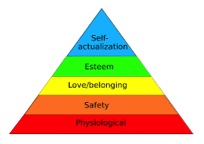
Maslow’s Hierarchy of needs. This theory is appropriate because while competing
and being successful it enhances and boosts a persons self esteem and
potentially self actualisation – baring in mind that these aspects are part of
Maslow’s theory and are high in the hierarchy. Therefore, the human competitive
nature represented in the opening sequence could be considered an ideology of
some form.
There are some generic conventional elements that have been
included in this opening sequence through the use of enigma codes. These enigma
codes grab the target audience’s attention immediately and really intensify the
atmosphere. Straight away the audience are engaged to the opening sequence
through the use of Roland Barthes Code Theory. An example of an enigma code
within the opening sequence could be denoted through the use of dialogue. A
minor character says to Jake Tyler (protagonist), “it’s too bad about your old
man” and suddenly there is a half attempt of flashback as a sudden, blinding
white effect appears on screen for a split second; almost like there is
something that the audience doesn’t know about yet. This effect of a half
flashback entices the audiences through the possibility of enigma codes along
the narrative structure of the opening sequence’s progressing storyline.Accordingly, a conventional element used in
the opening sequence is are the potential enigma codes that are connoted within
the opening sequence.
The genre of the film is signified through the opening
sequence by incorporating and the embedment of codes, such as: location, props,
colour, character types etc. The location is a key aspect when signifying the
genre and has obviously had a long thought process put into where the opening
sequence is set. Of course a location recce would have had to occur in order to
gain an insight of what the crew are working with. That fact that it is set on
a muddy, gritty and probably low – league pitch connotes the film is going to
produce a lot of drama because conventionally if an area is poor in comparison
to other locations then it is more than likely that something bad or dramatic
is going to happen. This is a stereotypical view based on the diverse social
classes within our country. A conventional belief is that if you come from a
poor background then you’re more likely to commit a crime etc. However, an
upper-class upbringing would result in an optimistic future. This is the same
representation used when deciding on what may happen next given the location. The
props and colours included within the mis-en-scene are quite rough and again,
the term ‘gritty’ describes it very well. Also, there is a hint of a character
type of the protagonist in the opening sequence. This links well with Vladimir
Propp’s character types theory as the protagonist could be represented as a
‘hero’ due to his strong determination and sense of awareness. This is
signified through the tackles performed on the other team. Ultimately, the
genre of this opening sequence could be a ‘tenacious action drama’. Reason
behind this is because it is apparent that the film will consist of loads of
drama and action that portrays the protagonist as a determined young adult
getting through life his way in the world. Possibly, this could relate to a lot
of the audience – hence why what genre it is.
The audience reception is key and must be engaging. Blumler
& Katz’s Uses & Gratifications theory suggests that audience’s watching
this media text would be looking for a function to fulfil their appetite for
films. This opening sequence definitely provides the audience with an
entertainment function due to the fact that it is engaging to watch. In
addition, audiences may be searching for identification that is also linked
with the Uses & Gratifications theory. This is because; potentially some of
the target audience can really sympathise, empathise and relate to the
protagonist.
Within the first two minutes of any film, narrative is
signified through visual iconography and technical elements as explained above.
The institution has included enigmas of the storyline and possible narratives,
for example: the dialogue referring to the protagonist’s dad may introduce
itself to be a huge narrative and provide the storyline with a range of
enigmas. The signs that are behind this flashback are the use of the white
effect on screen that hints to a past and a future of this particular
narrative.